Billy Apple
Christoph Dahlhausen
Simon Morris
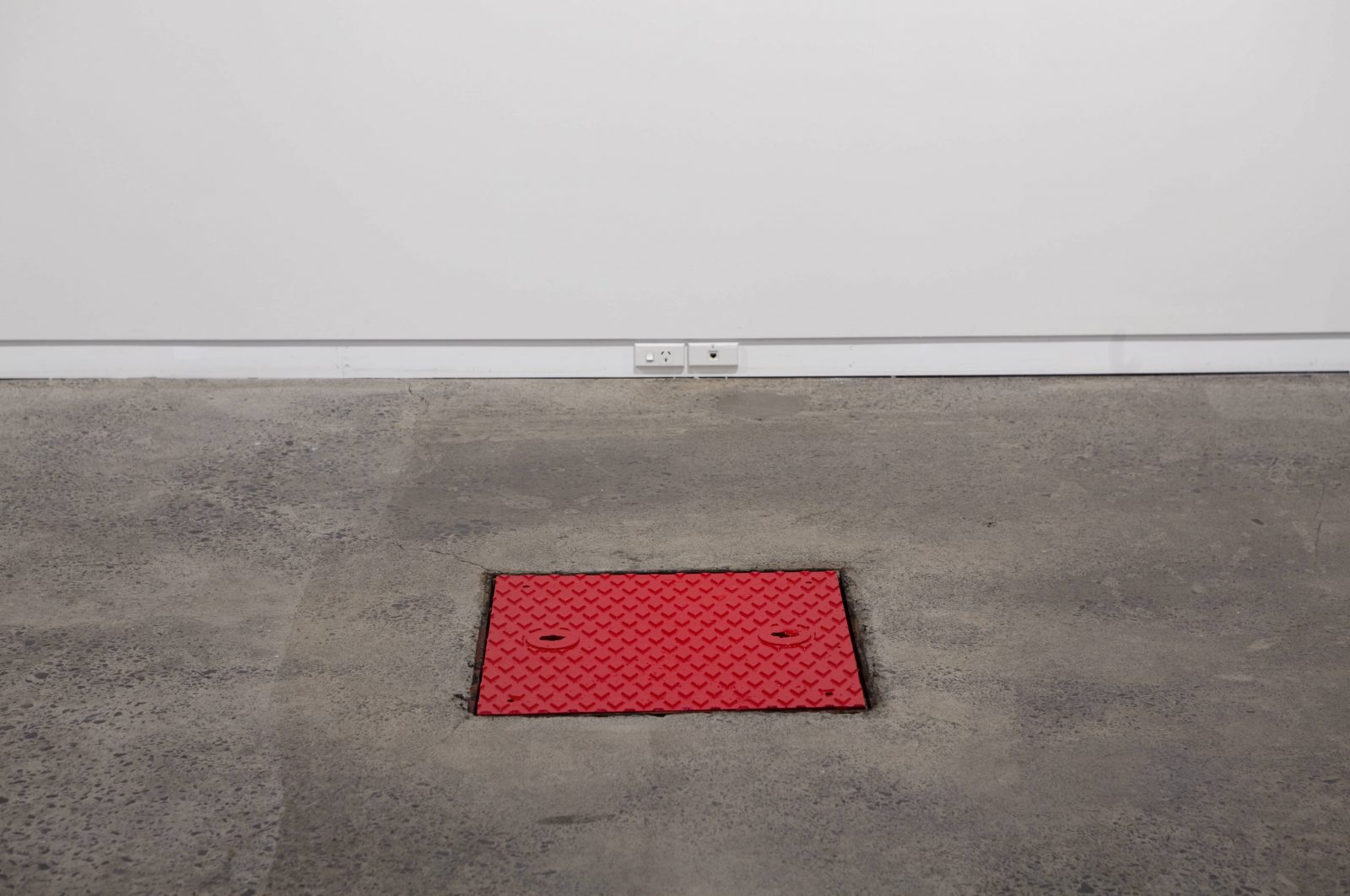
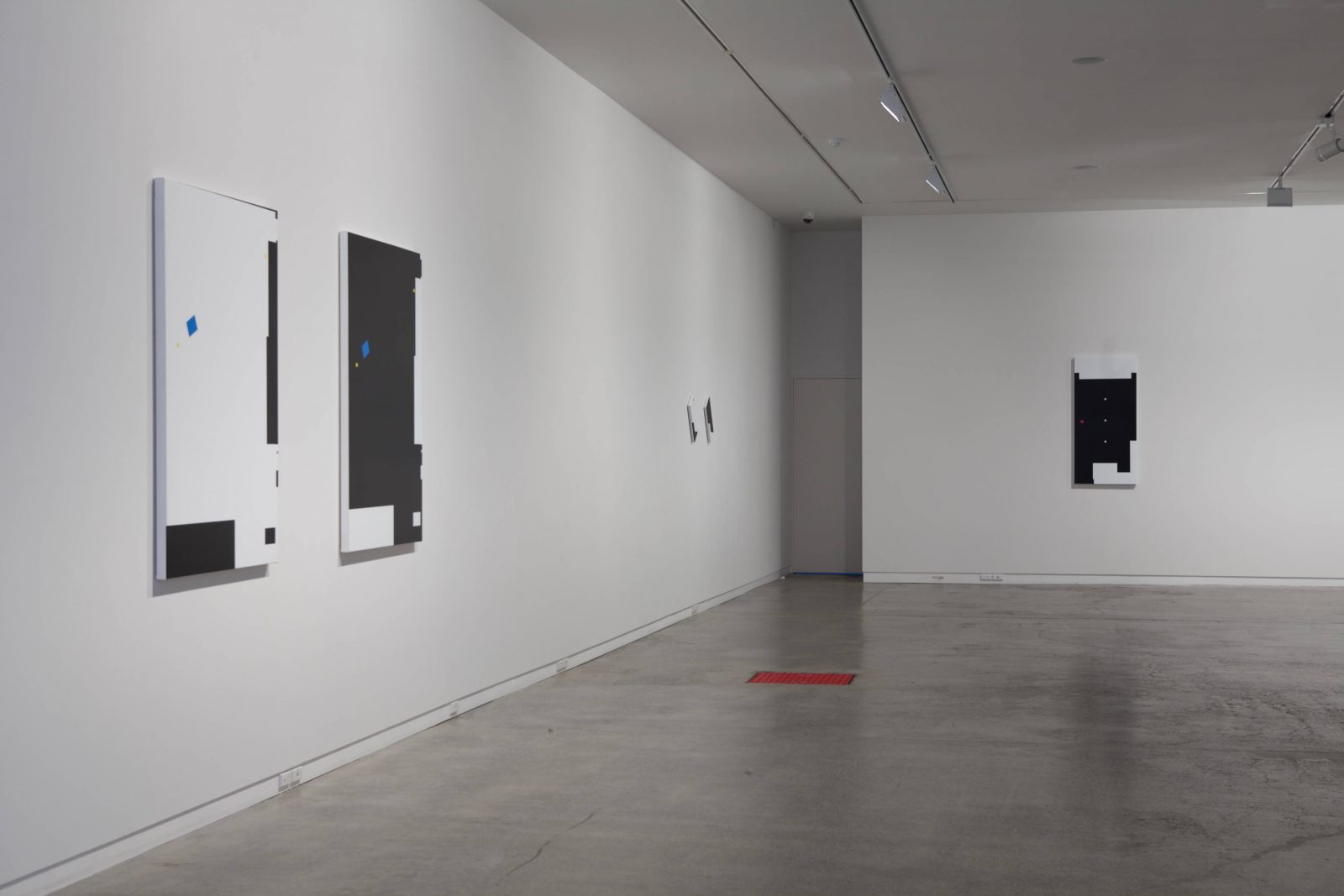
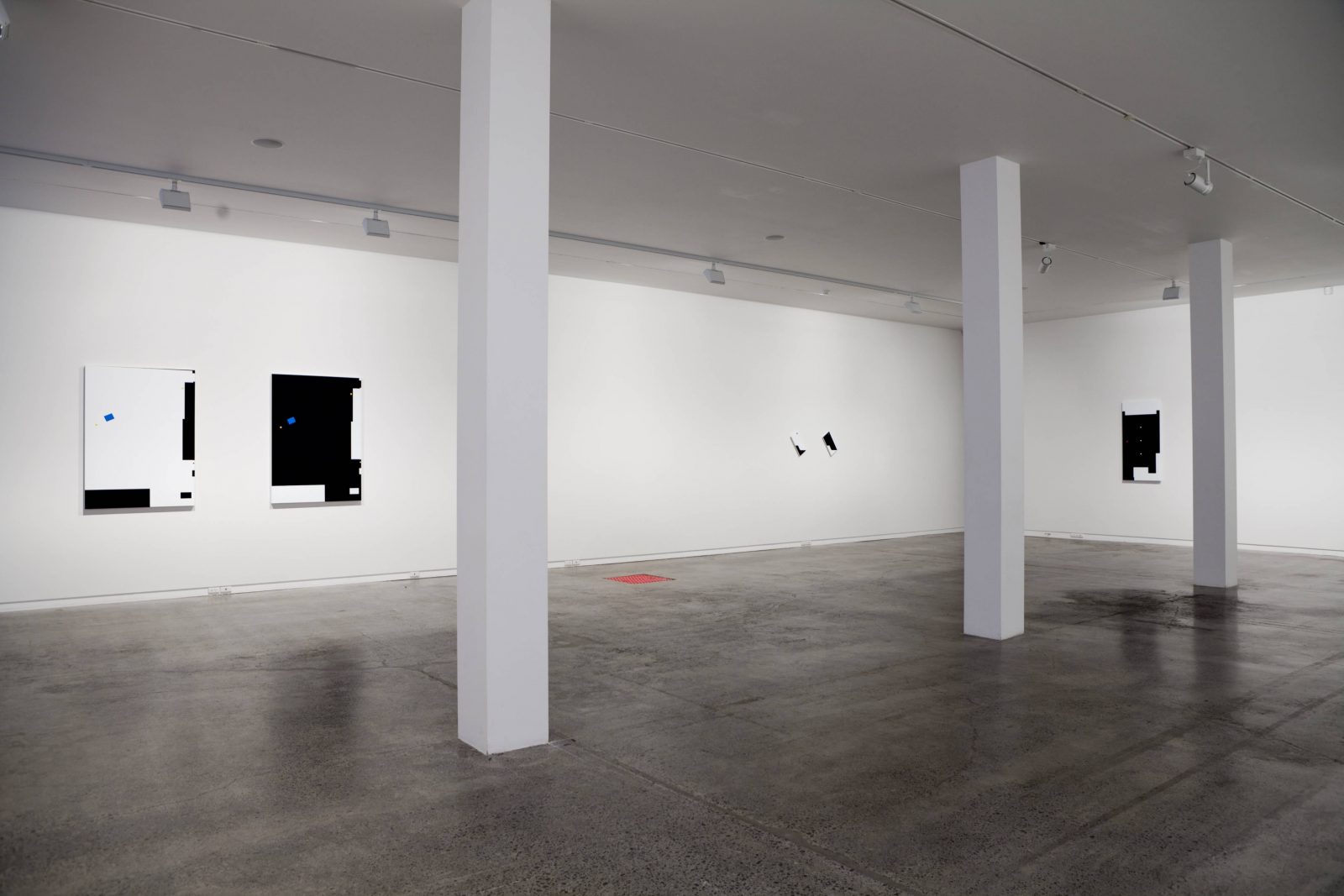
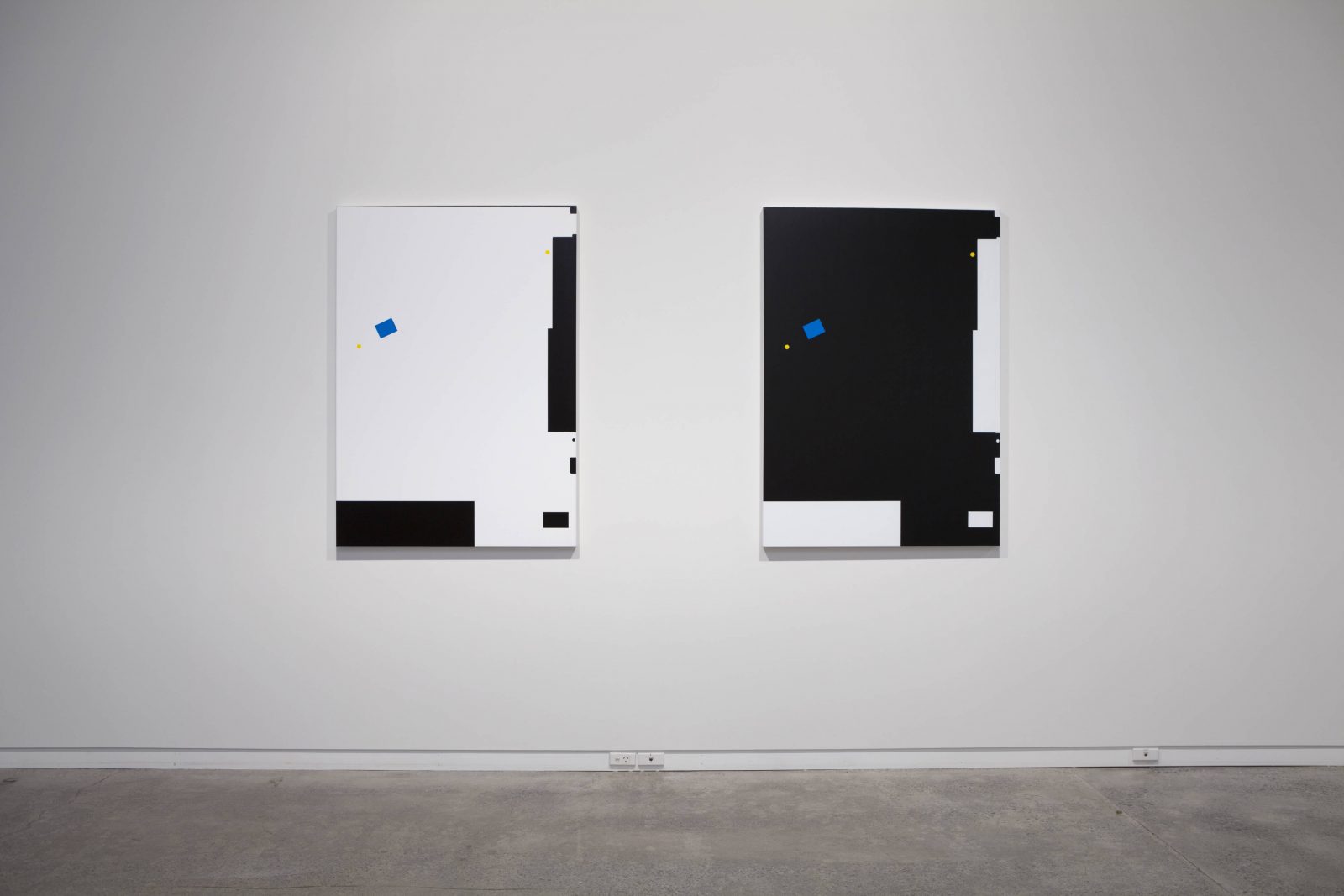
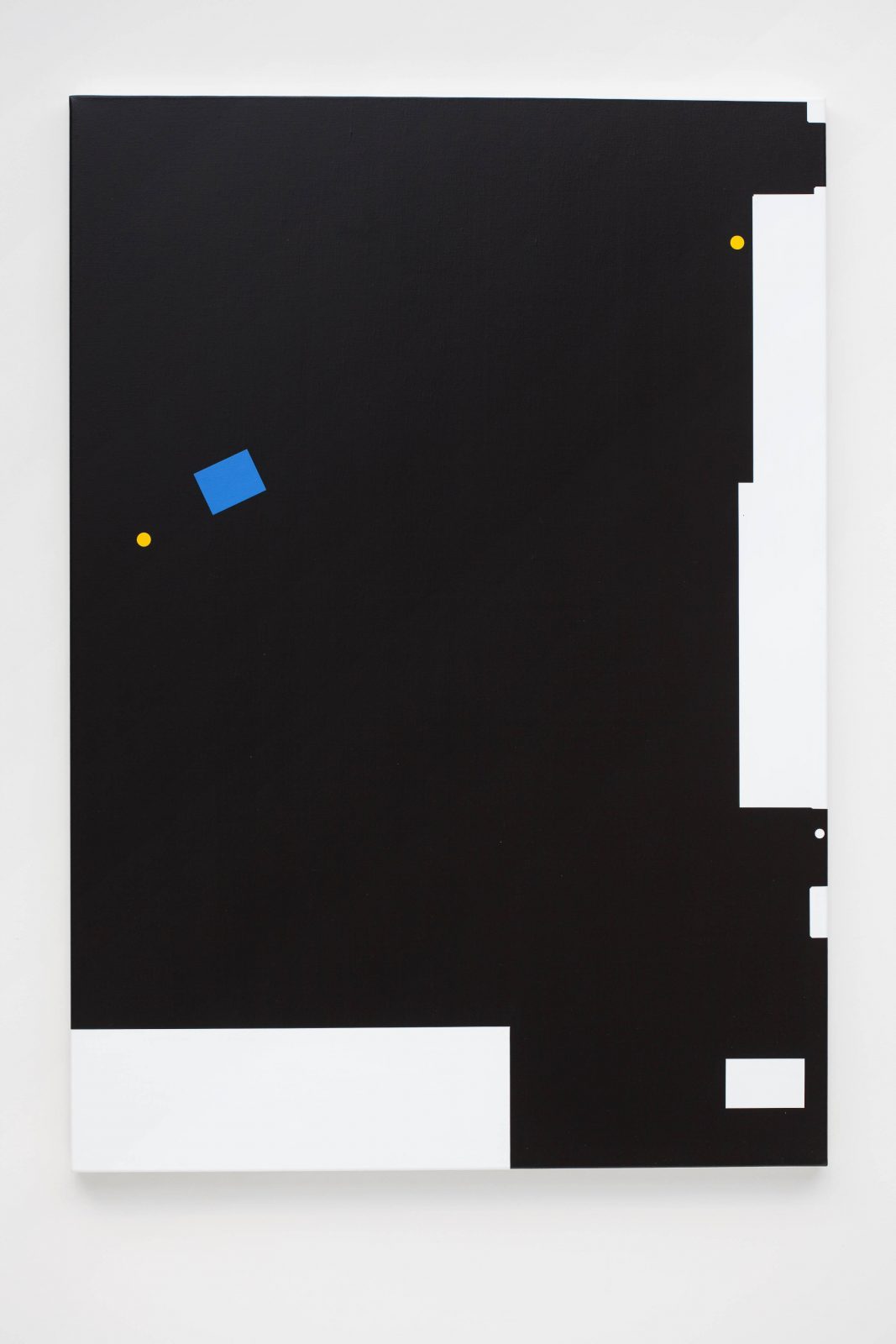
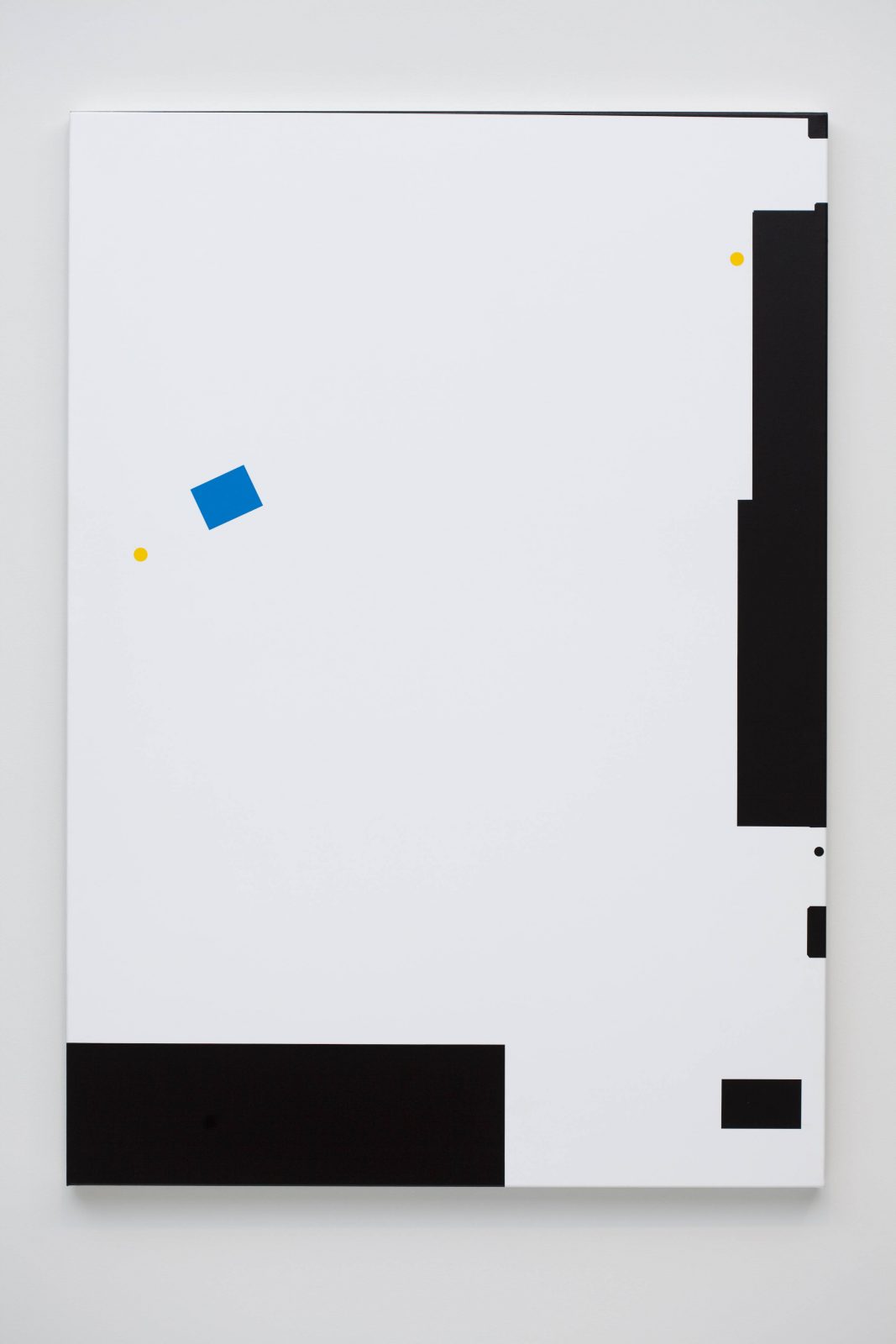
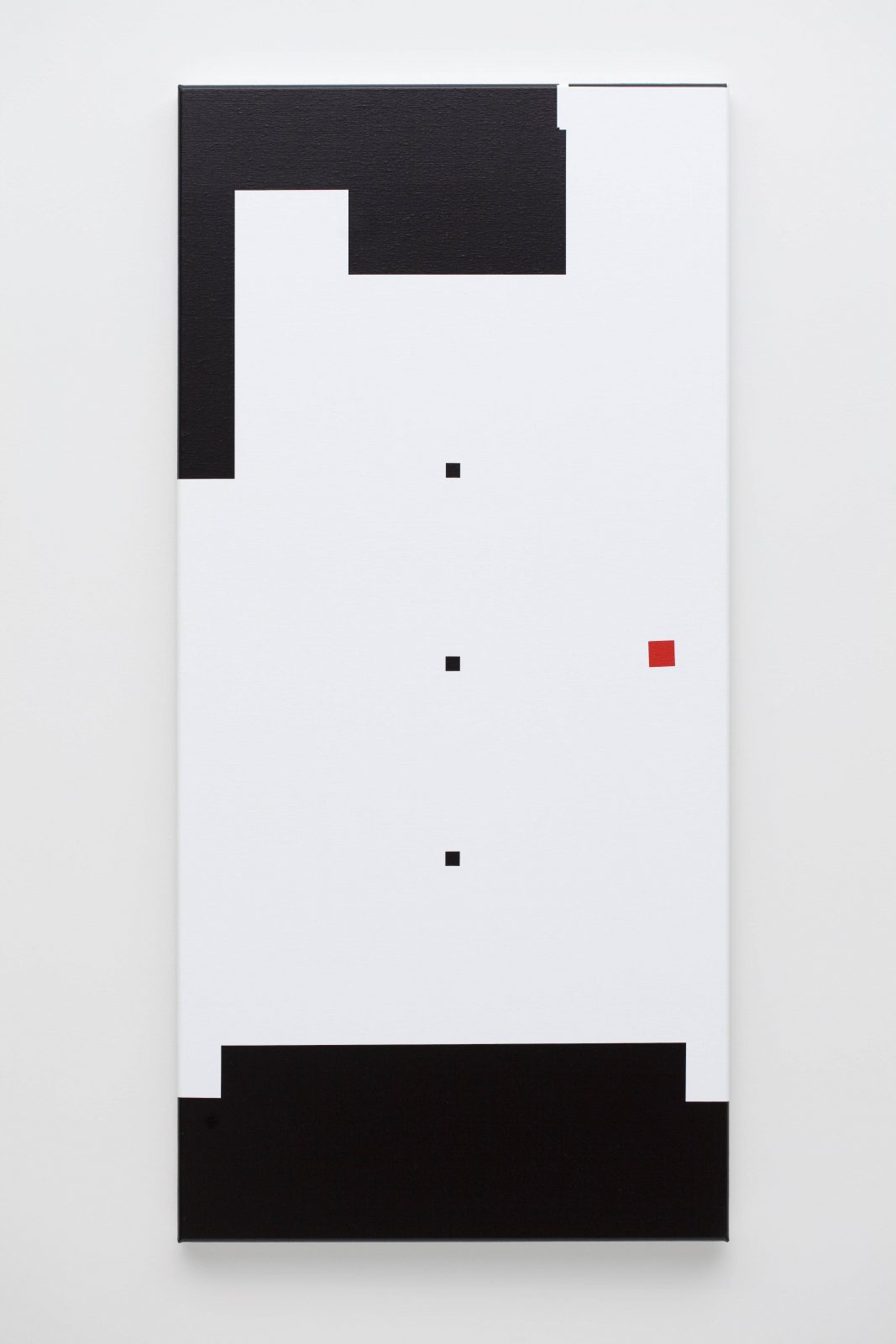
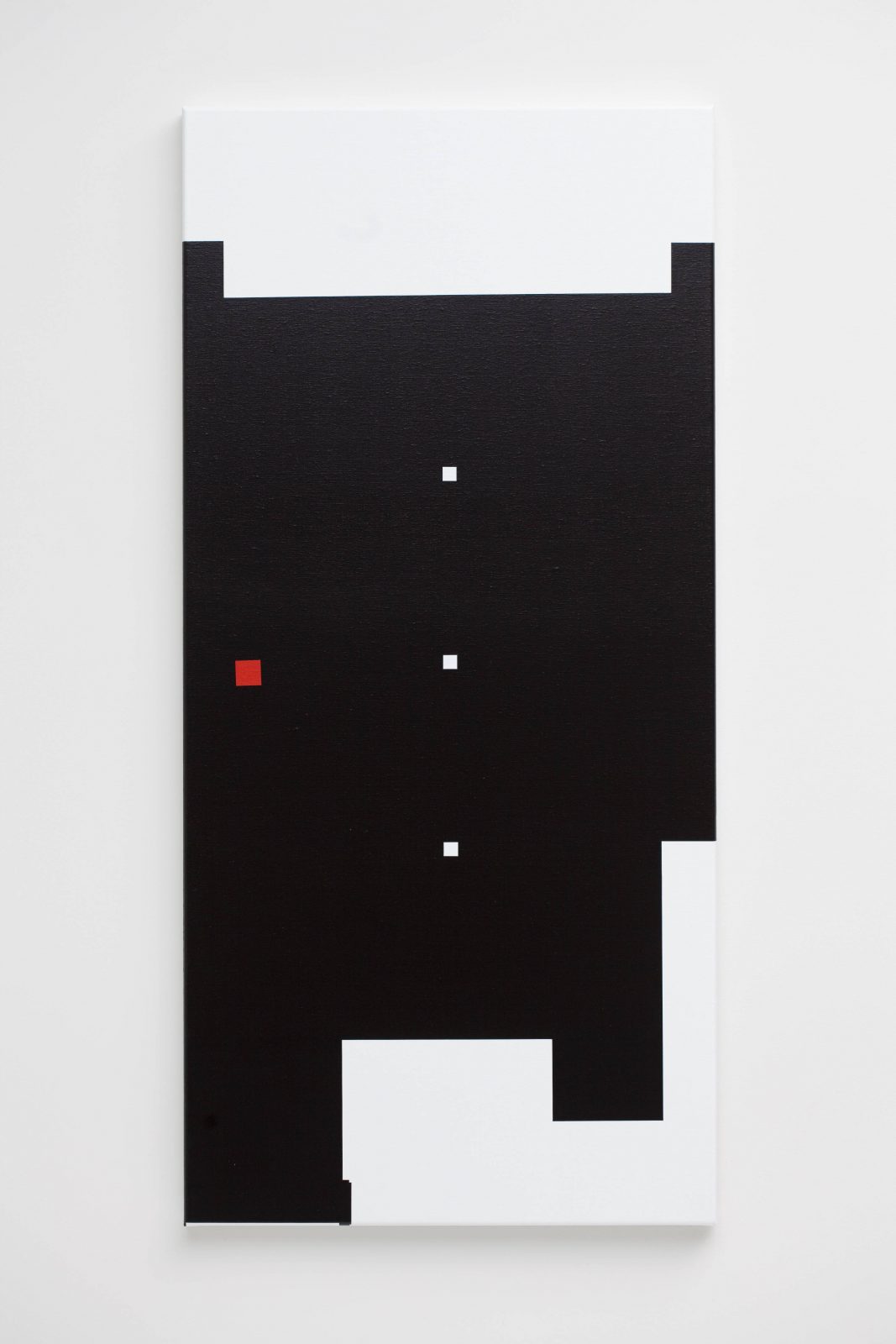
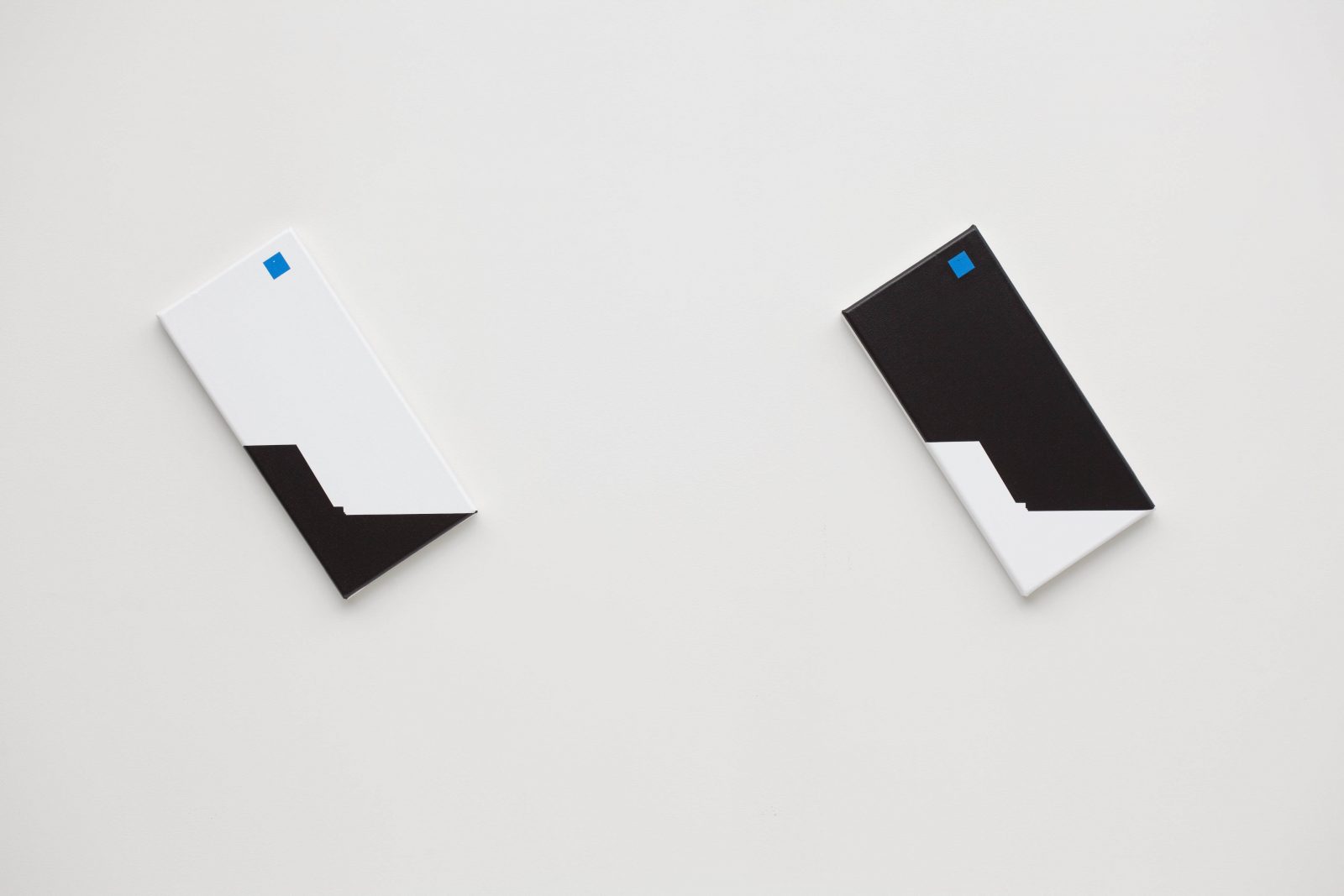
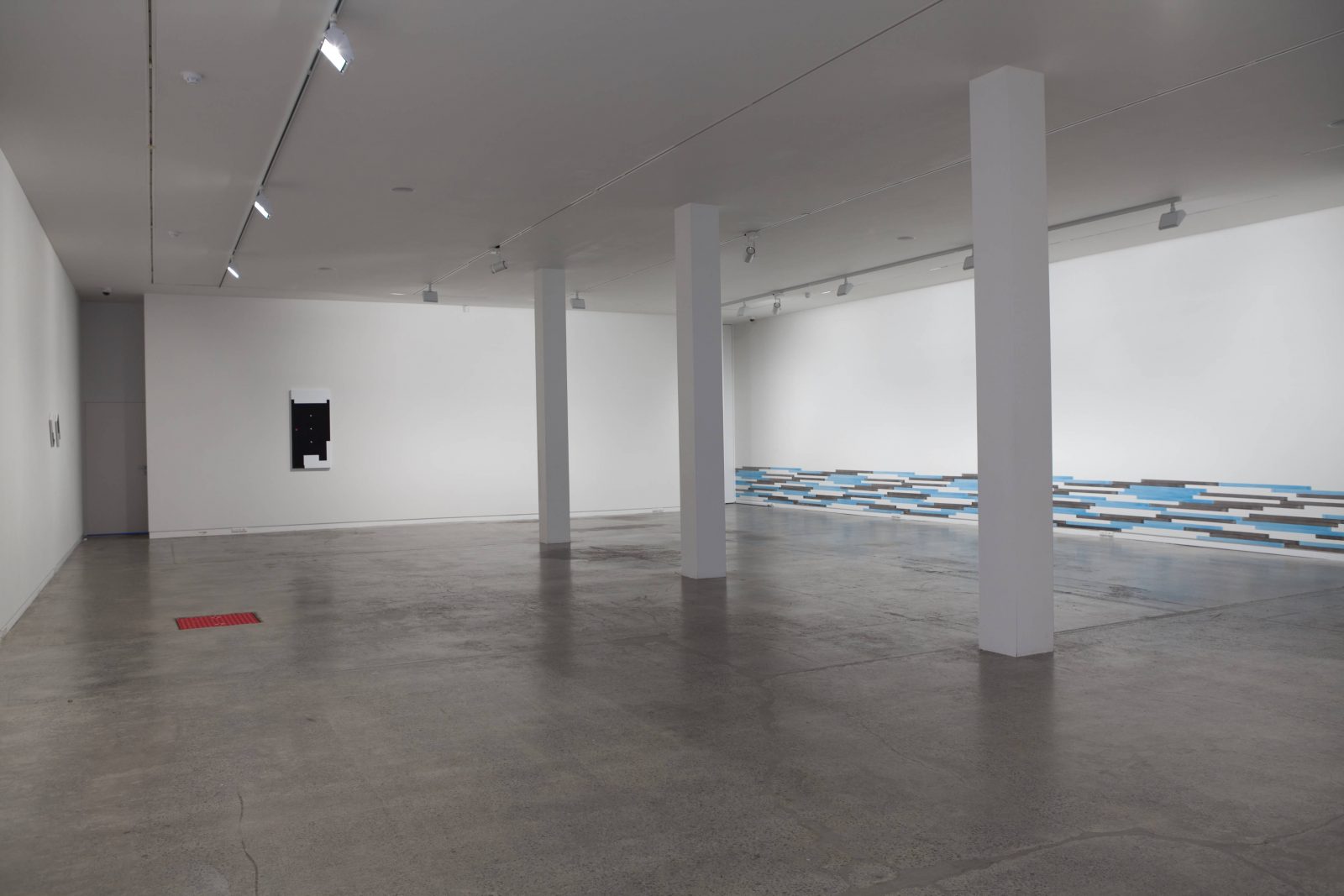
Billy Apple is represented in Gallery Abstract by three diptychs; one is new and prepared specifically for this Two Rooms show, the others date from 2007 and 2011. Apple has used the term ‘gallery abstract’ for some time, to reference a strand of his practice involving two-dimensional work, normally paintings or drawings, based on the floor plan of the gallery space in which it is, or was first, exhibited. In Apple’s oeuvre such site specific works have a considerable history, most recently they have drawn attention to the inspection points for underground drainage systems, storm water in the case of the Roger Williams, Auckland, and {Suite} Gallery, Wellington, and sewage in the case of Two Rooms.[1] In bringing together Apple’s three most recent gallery abstracts, this exhibition represents the three standard scales (1:50, 1:20 and 1:10) he used for the three gallery abstracts of the Sue Crockford Gallery he exhibited there in 2000. Most significantly, this exhibition combines for the first time in situ diptychs with out of situ.
The two earlier works here seek a second life apart from the sites of their original exhibition, sites which were also the original subjects of their abstraction. As hung here their site specificity is not self-evident. The {Suite} works were hung side by side on the back wall of the gallery on an angle from their top right corners so that the line that bisected the lower right corner of each was parallel with the Gallery’s frontage on Oriental Parade. The Roger Williams works, here hung side by side, were originally hung opposite one another, as with the new Two Rooms pairing. [2]Each was hung upside down in relation to the other, so the lower edge of the plan in each painting is immediately above the floor line of the wall on which it hangs. These indicators of orientation provide a choreographical supplement to the cerebral abstraction of the plan—like what Laurie Anderson said of writing about music being like dancing to architecture.
By drawing viewers’ to attention to the spruced up covers of the inspection points of the underground sewage system in the floor of Two Rooms, and immortalizing them in ‘abstractions’ Apple might seem to debase, in glib postmodern fashion, all the transcendentalist aspirations of twentieth painting. Although Apple is less satirist than analyst—remember the way he dealt with his personal plumbing back in the seventies, the trouble he caused with his ‘Excretory Wipings”? –the juxtaposition of distributions systems, here of human waste and high cultural endeavour certainly offers a reality check of sorts. The proliferation Apple’s Auckland gallery abstractions implies there’s a map being drawn of the city’s art system, overlaying its street and drainage systems, and which like other of the artist’s recent public art projects is concerned with the culture of the urban economy. [3]
Though unusual this connection between site specificity and distribution, or exchange, is not peculiar to Apple’s work nor separate from the central purposes of conceptual art. It is variously implicit in Lawrence Weiner’s work, and an aspect of the unique forms of exchange he has fashioned for his work. And at a collateral exhibition at last year’s Venice Biennale, Personal Structures at the Palazzo Bembo, Joseph Kosuth launched a new series of works : ‘The Mind’s image of itself. A Play of Architecture and the Mind’ which certainly bears comparison with Apple’s recent series of gallery abstracts. Like many of Kosuth’s installations, this featured words on walls, on this occasion on wallpaper which carried, somewhat off centred, a one-to-one scale architectural drawing of the plan of the wall onto which it was been pasted. This was accompanied by his usual collection of quotations which taken together provided a high culture ‘reading’ of the room.
These site specific wallpaper works were not themselves for sale. But last September, Kosuth exhibited another at Spruth Magers, his dealer in London, as an example of commissions he would entertain: private collectors can have their own rooms or offices measured up and wall papered in a similar way. Similarly, Apple will accept commissions for ‘abstractions’ of home or office interiors. Apple’s paintings are both site specific and site general, or put it another way, they are as regards their intellectual mission, exemplary objects of exchange.
–Wystan Curnow
[1] see Wystan Curnow, Two Gallery Abstracts, Wellington, {Suite}Gallery, 2011, for a short history of these works.
[2] This is, in fact, its third presentation; site specification varies from case to case. The canvases were hung in Apple’s 2009 retrospective Revealed Concealed at opposite ends of a gallery at the Witte de With Center for Contemporary Art, in Rotterdam, a world away from the Newton, Auckland, site of the Roger Williams.
[3] The repainting of two waste water (blue) and the sewage (red) inspection point covers was part of Apple’s Wairepo Swamp Walkway project 2010.
CHRISTOPH DAHLHAUSEN: New Ways to Colour the Wall
Christoph Dalhausen has been described as a researcher in colour and painter of light. He specializes in facades, glass walls, installations and art-in-architecture projects.
In a practice that is determined by the characteristics of the site, he applies translucent colour film to large-scale glass windows so the interior light and space take on a new aspect. Vertical or horizontal strips of colour create new rhythms for the facade and the formation of new reflections and shadows transform the spaces.
A careful look at The Two Rooms façade reveals Dahlhausen has applied narrow strips of blue vinyl to the glass, which play with the sunlight as it moves across the building. Eighteen years ago Dalhausen proclaimed that he no longer paints but with these site-specific interventions he allows the light to paint for itself.
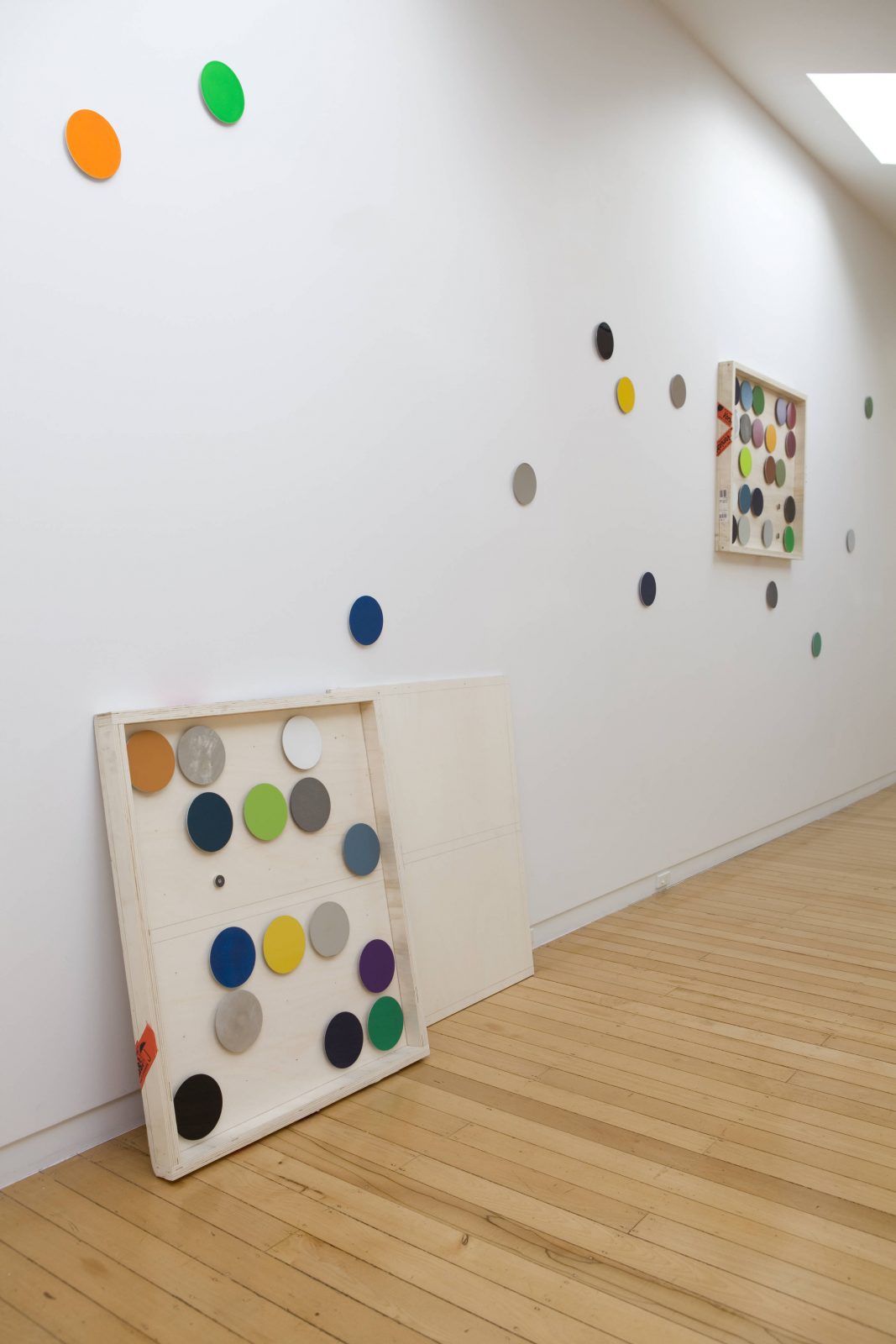
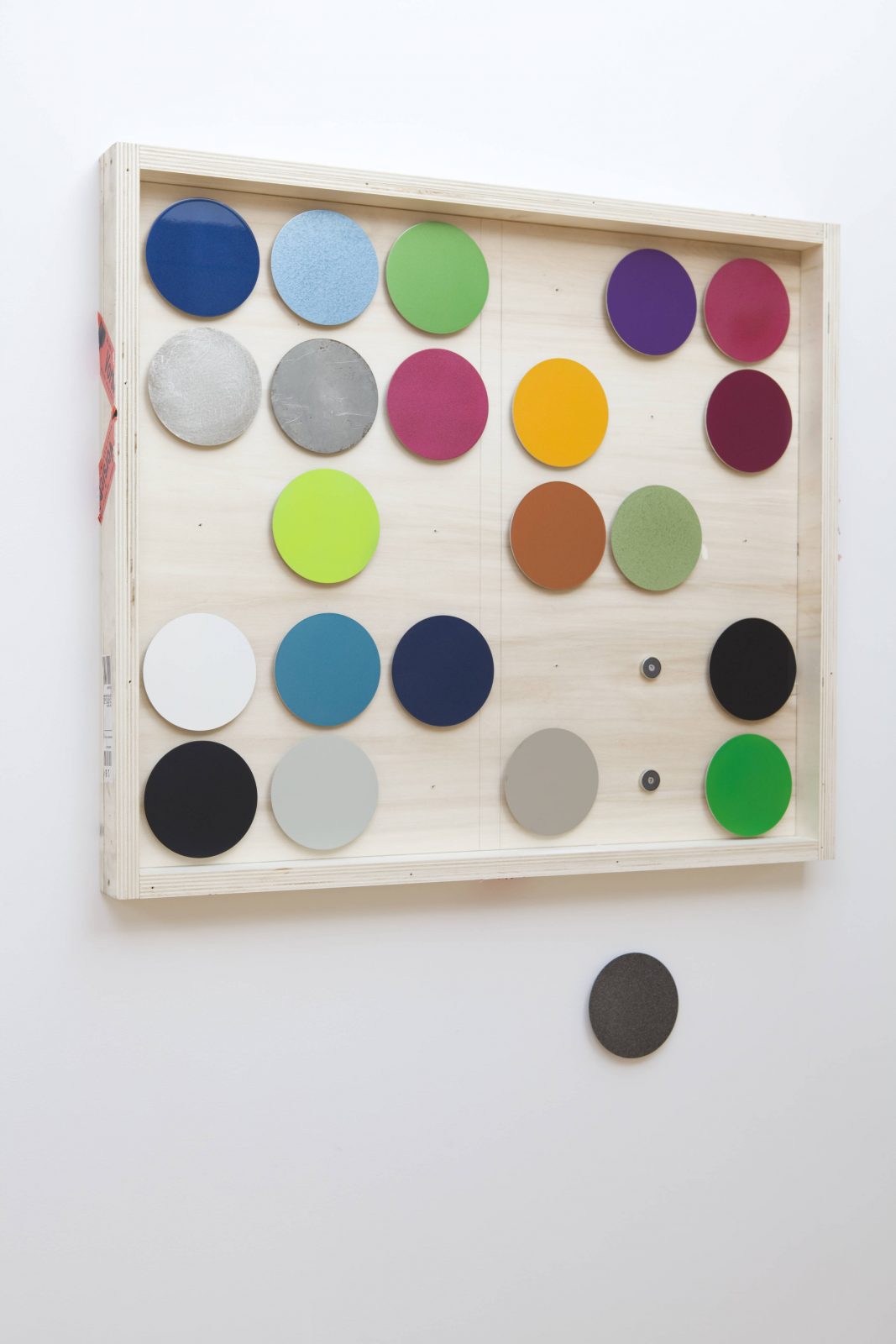
New Ways to Colour the Wall is from a new series of work, comprising a wooden crate which contains many small discs. The crate can come in all sizes depending on the site. The discs are fabricated from metal, including aluminum, painted stainless steel and mirrored surfaces, to comprise, quite deliberately, a mix of very reflective, brightly coloured and matt objects.
Very playfully the dots are applied to the wall, creating a canvas from the gallery wall with the dots, the paint. For some one who has abandoned the mechanism of painting he now has the means to create a wall painting.
In addition the crate, which has been used for shipping purposes, becomes part of the work with all its travel dings and knocks. In some instances all dots can remain in the box, at another venue the dots might spread out on the wall to create a busy or dense image. It very much depends on the artist’s response to the space.
Christoph Dahlhausen lives and works in Bonn, Germany. He studied cello, medicine, psychotherapy and fine art. In 2003 he won the City of Bonn Art Award. He has shown extensively in Europe and Australia with solos exhibitions in museums throughout Germany. Architectural commissions have been realized in Australia, USA and Germany. His work was shown at Two Rooms in the exhibition Colour, Light, Time 2010 and has been collected by Chartwell for Auckland Art gallery.
SIMON MORRIS: Coloured Line 2012
Simon Morris’s work has developed from a critical interest in painting practice that stretches from object-based paintings to site responsive wall drawing, installation, and architectural collaborations. The conceptual basis for his work comes from the history of abstraction and the relationship between abstraction and the everyday. A significant aspect of his work is the engagement of painting in time and space.
Working with the architectural qualities of Museums and galleries, referencing both form and function, complex wall drawings have become an increasingly important part of his practice. He has incorporated his interests of architecture and mathematics into a unique environmental painting approach, which combines a dramatic expansion of scale working within specific constraints of time.
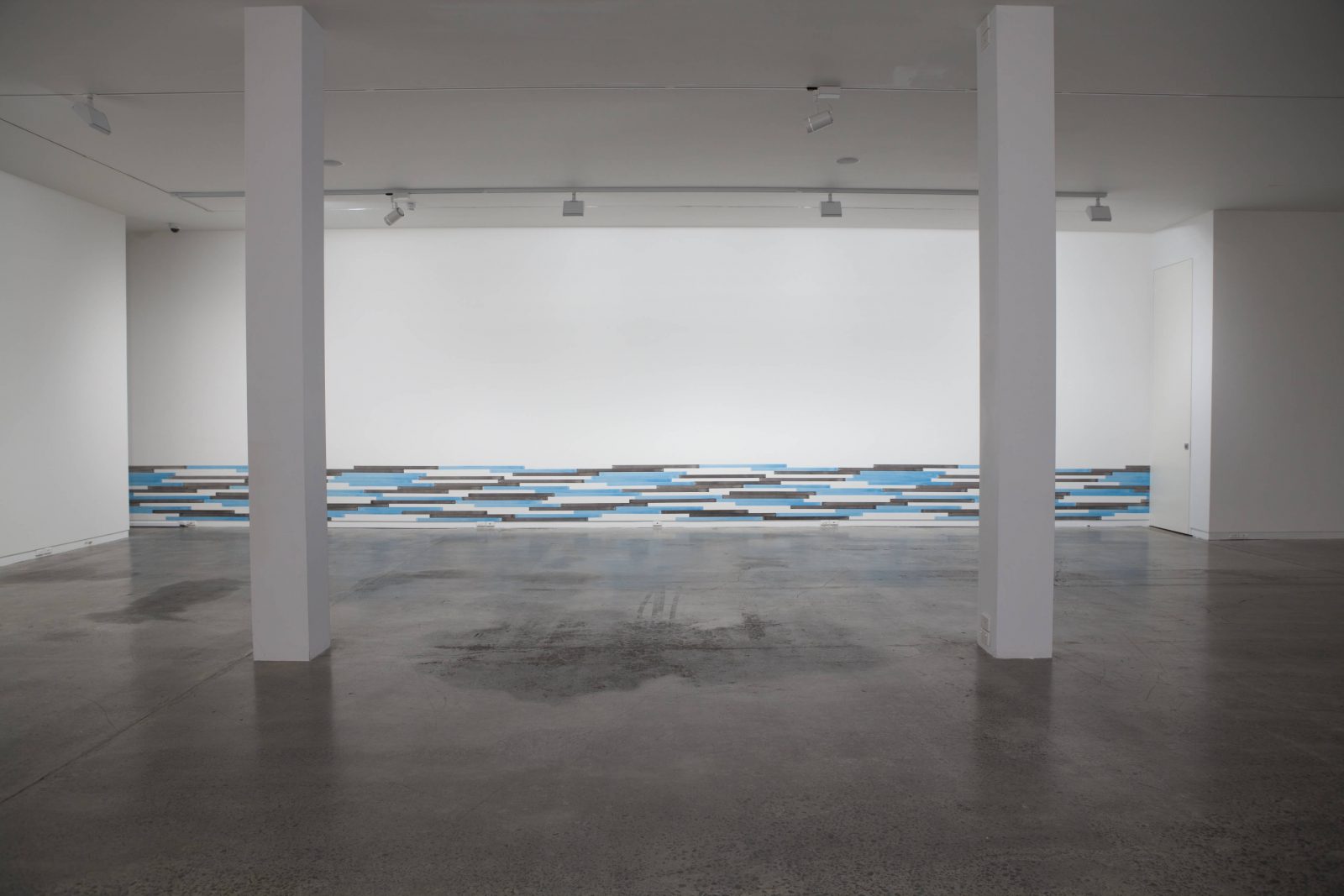
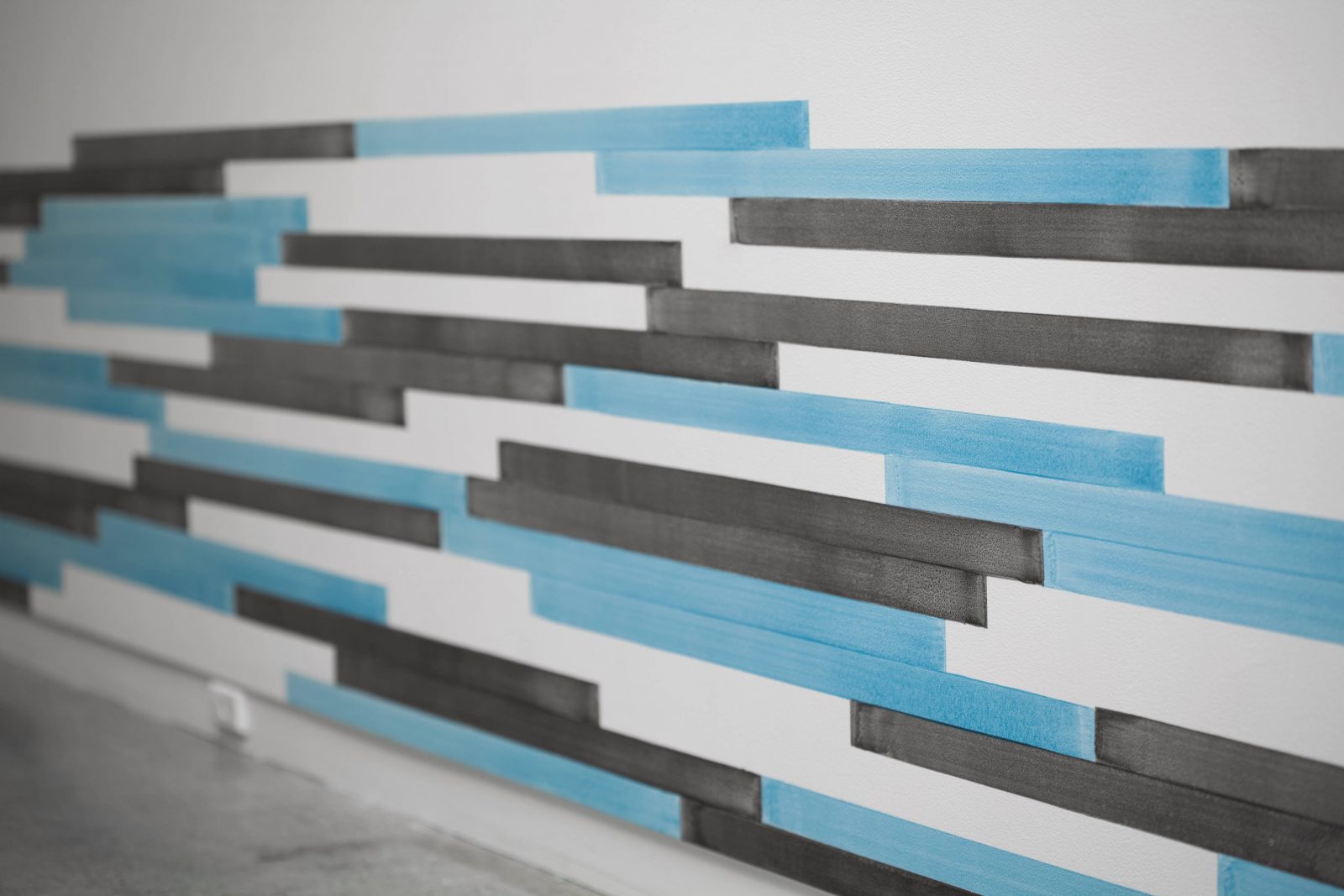
The conceptual premise defining the drawings is that a set of instructions must be followed and repeated. Morris explores how a pre-determined action, once initiated, can determine the making of a painting within an architectural site and embrace the possibility of chance and surprise.
In this new work for Two Rooms, Coloured Line 2012, the idea is that the line works its way horizontally from left to right, right to left, left to right from the floor up the wall until there is no more time to continue painting. Each coloured segment is one meter long, and the paint is applied with a light fluid touch. “I’m interested in the way the pattern clarifies as more time is spent painting in space.”
Recent wall work projects include: Blue Water Colour, The Dowse Art Museum, Lower Hutt, Wellington, 2011; Reason and Rhyme, Gertrude Contemporary, Melbourne, Australia and St Paul Street Gallery, Auckland, 2011; Black Water Colour, Dunedin Public Art Gallery, Dunedin, 2010; Folding Water, Two Rooms, Auckland, 2009; Yo Modernism II, CCNOA, Brussels, Belgium, 2009; two site-based collaborations with Athfield Architects at The New Dowse, Wellington and at the University of Otago School of Medicine and Health Science, Wellington, 2007; Prospect 2007: New Art New Zealand, City Gallery Wellington, 2007; Simon Morris: Painting Projects 2000-2005, The Physics Room, Christchurch, 2005 and Sit Talk Look Write, Litmus Research project, Massey University, Wellington, 2005.